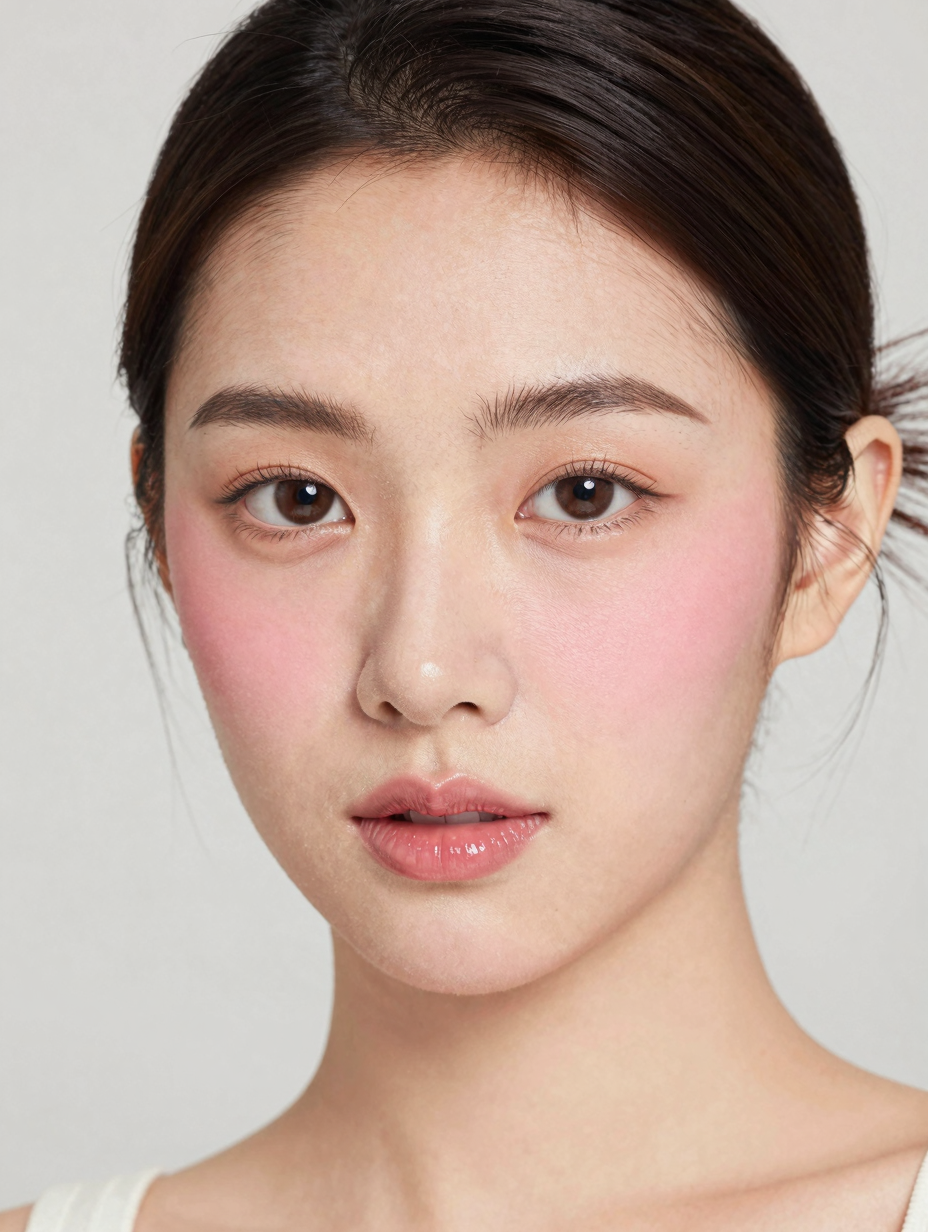
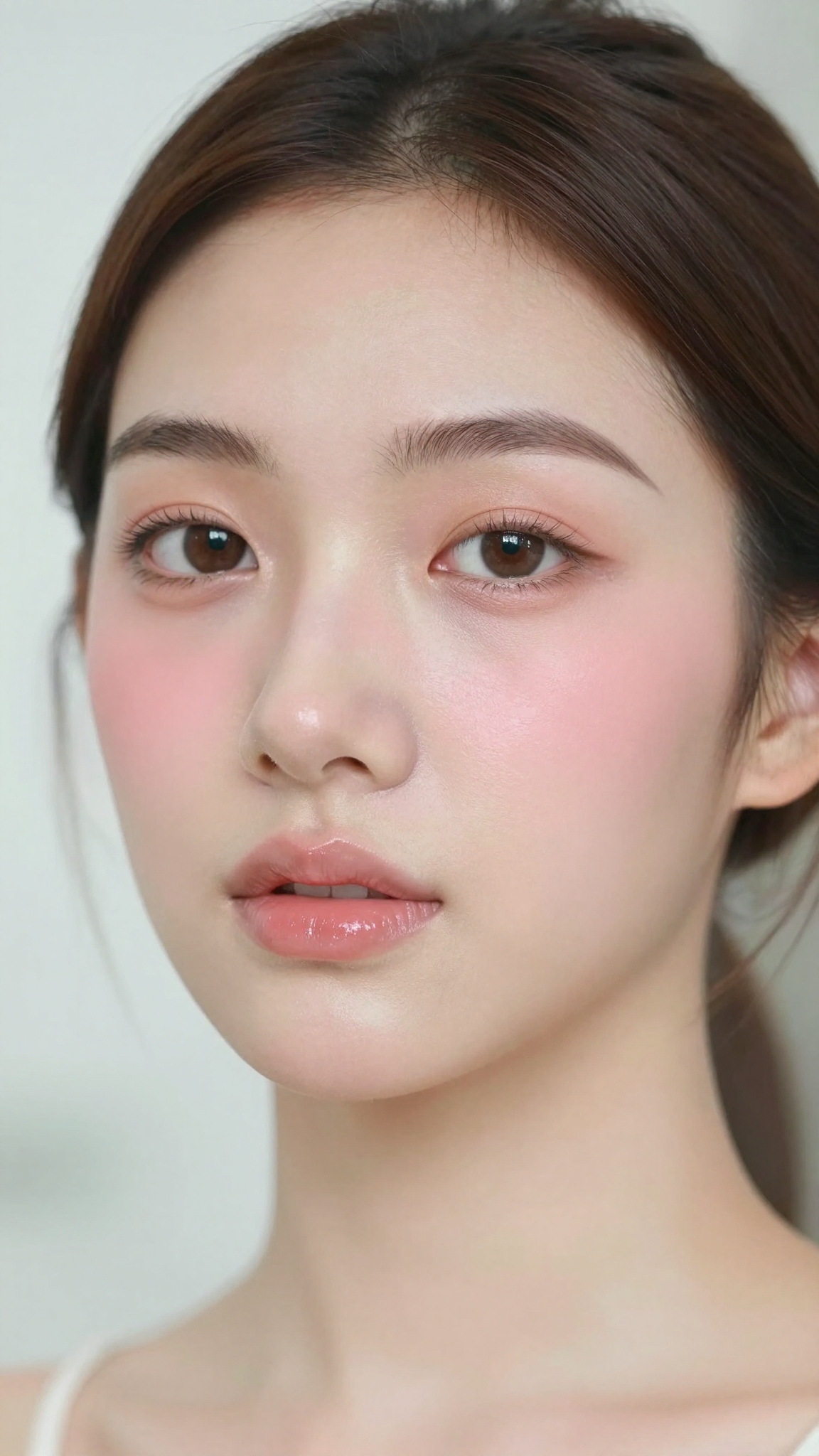
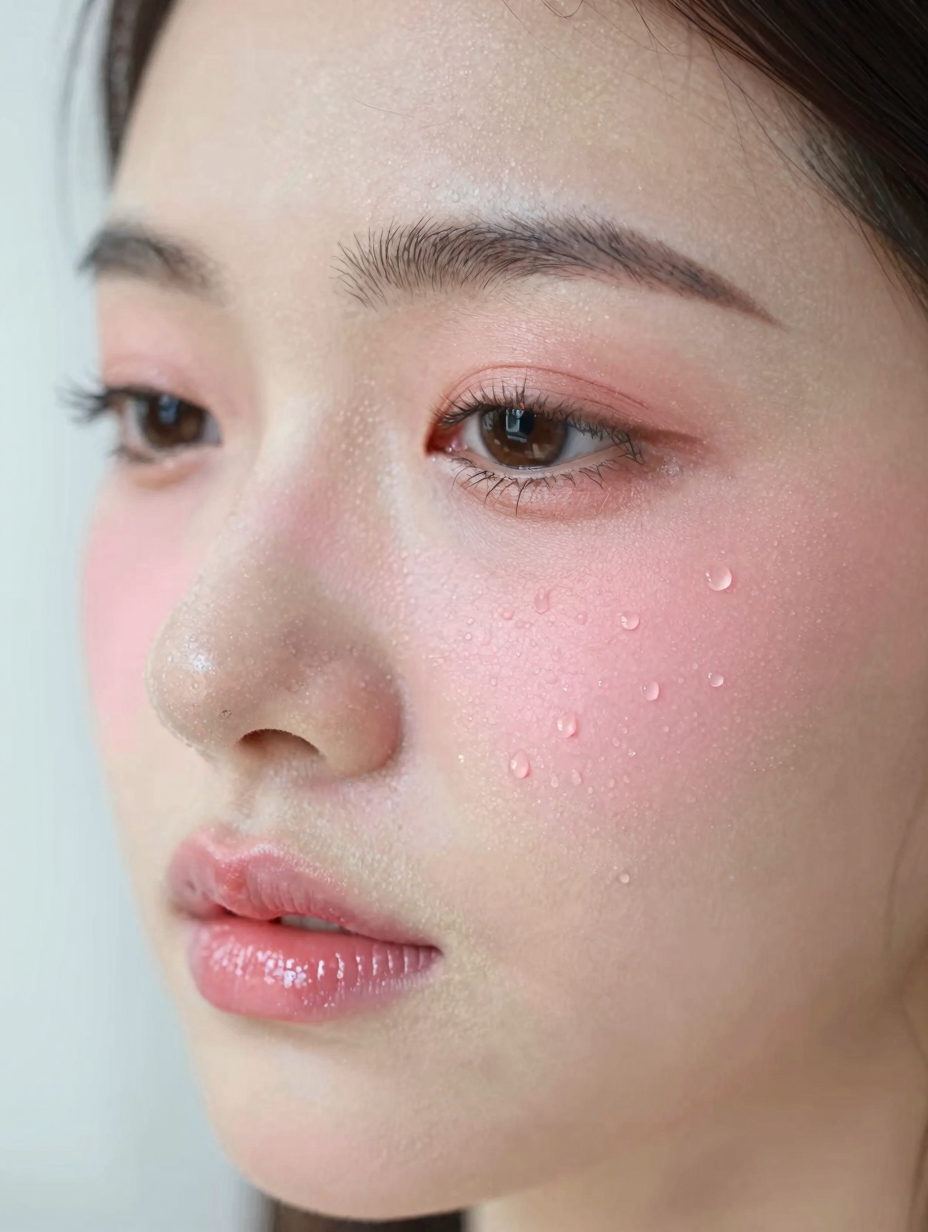
This tutorial covers the glass-skin, blush-heavy technique behind the trend — a dewy, luminous base with blush applied more widely and generously than most Western techniques, keeping the eyes deliberately minimal.
The most common mistake replicating this look is treating blush as an accent instead of a focal point — the wide, diffused blush application is what actually defines the style, more than any specific product.
Cream blush blends more convincingly into the wide, diffused shape this look needs than powder blush does — powder tends to create a more defined edge that reads as a smaller, more contained application.
Tips & Common Questions
What's the one product that makes or breaks this look?
The blush — specifically the amount and placement. It's applied more heavily and diffused more widely than most Western blush techniques, and that wide, soft blush wash is the single most identifiable feature of this style.
How do I keep my skin dewy without looking oily by midday?
Use blotting papers on the T-zone only, rather than powder, when shine builds up — blotting removes excess oil while a dewy base underneath stays intact, where powder flattens the whole effect.
Does this work with a matte skin preference?
The look specifically relies on a dewy, luminous base — a fully matte version loses the 'glass skin' effect the style is built around, so this isn't easily adapted to matte skin.
Why do the eyes look so minimal compared to the rest of the face?
The look is designed to draw attention to skin and blush rather than the eyes — a heavier eye would pull visual focus away from the dewy base and diffused blush that define this style.