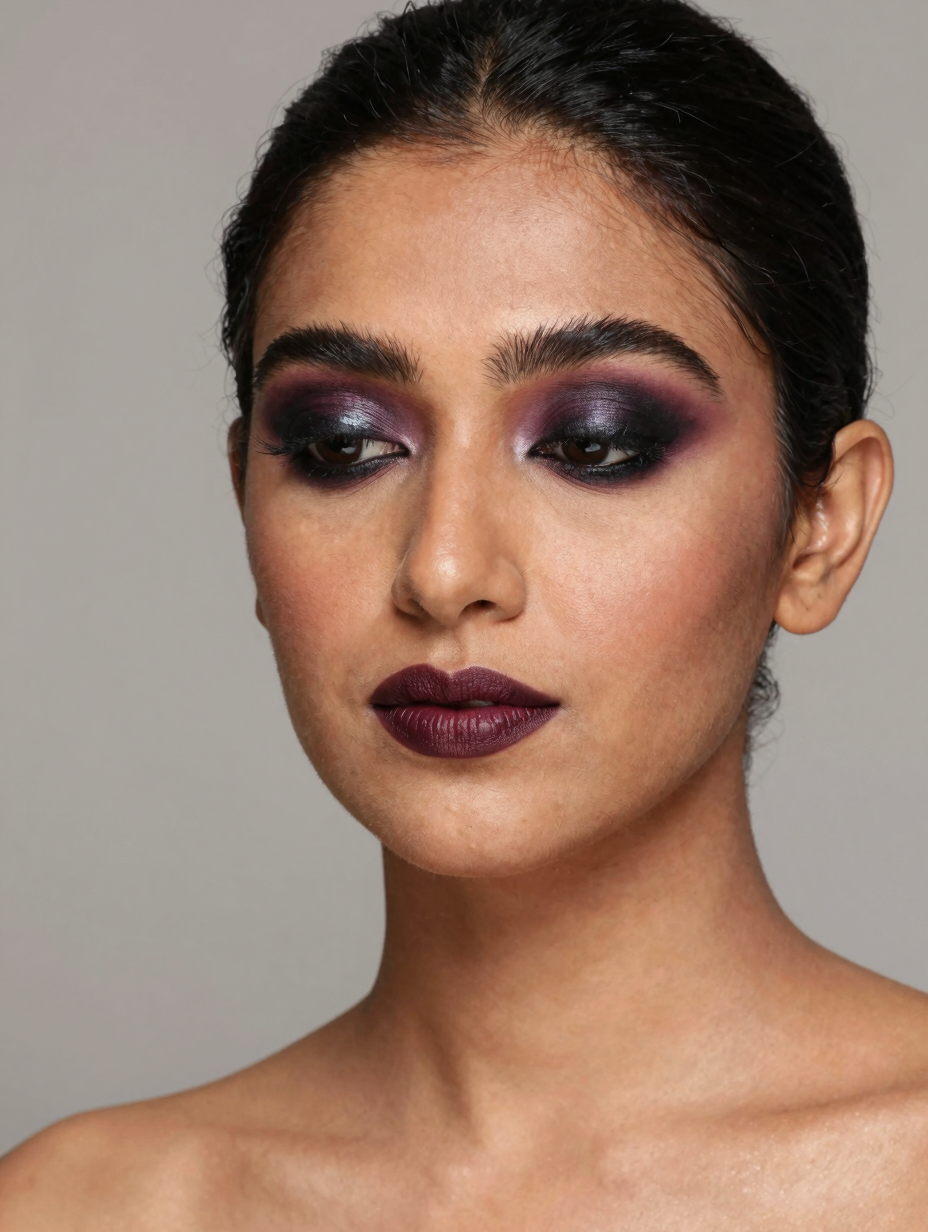
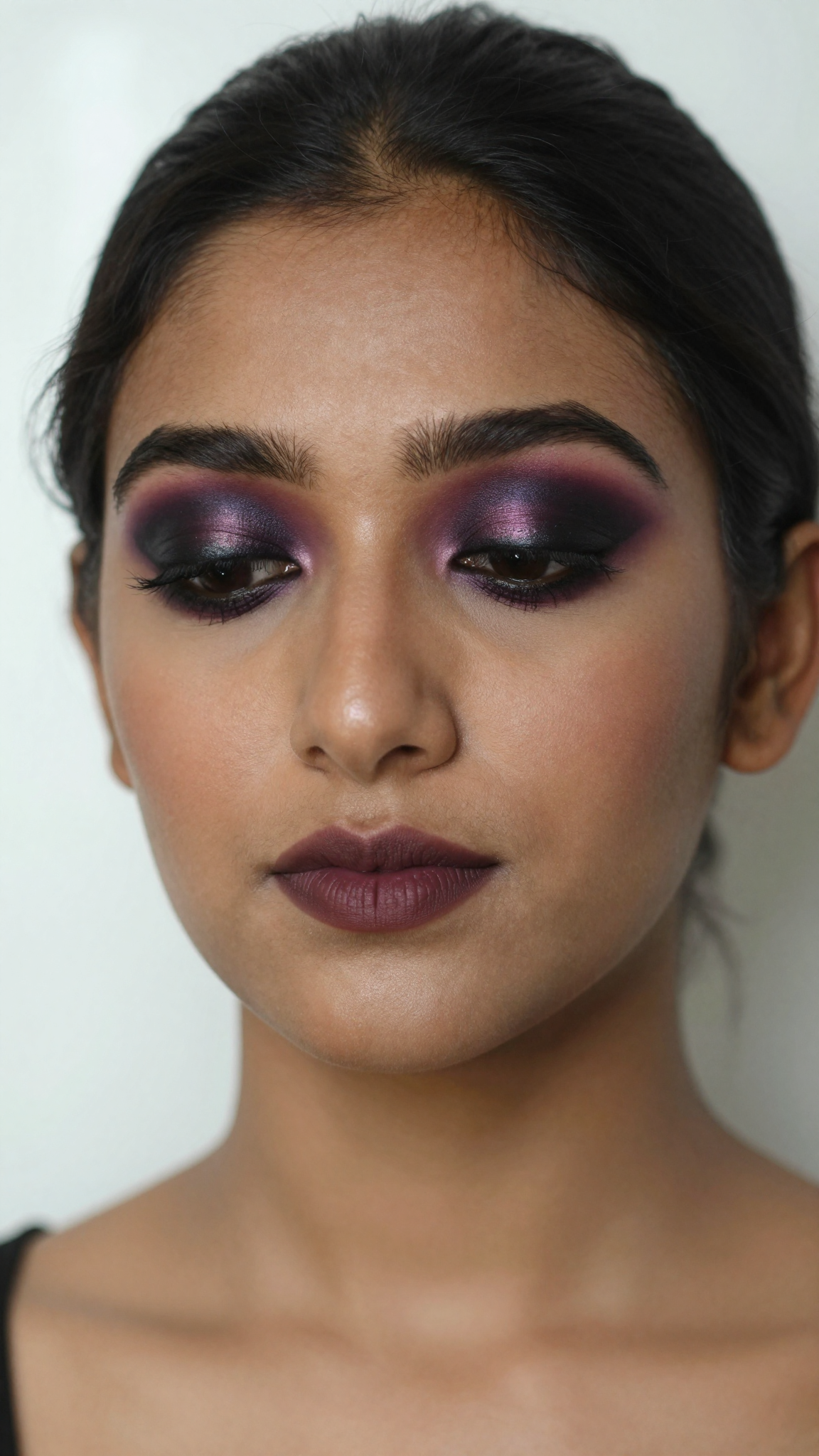
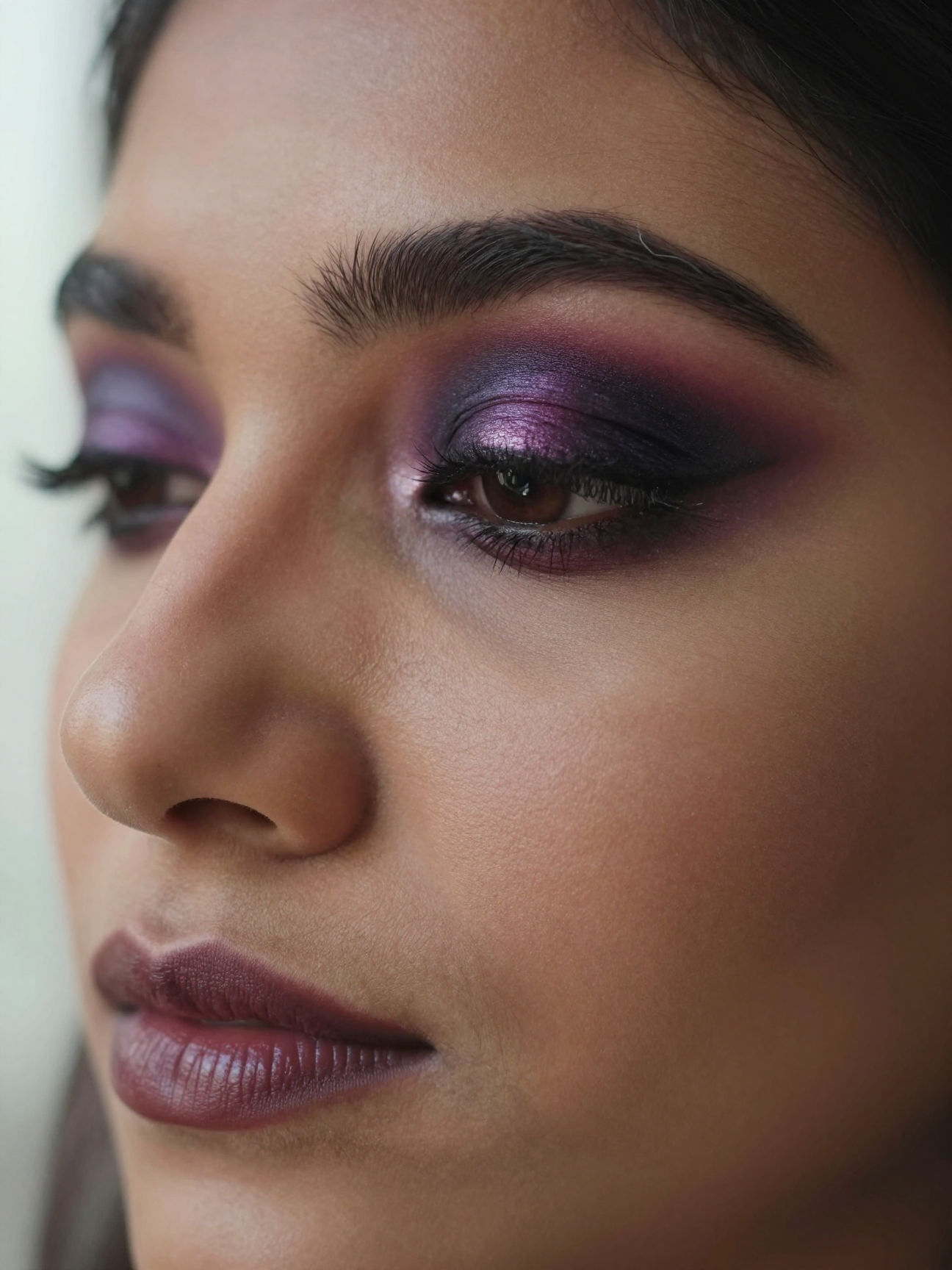
A dark makeup look, done well, is about layering and depth rather than just how much dark pigment is applied — a single flat coat of black or plum eyeshadow reads as muddy, while the same shade built in layers over a neutral base reads as rich and intentional.
The highlighter step is the part most people skip with dark shades specifically, and it's what prevents the eye area from looking flat or tired, which is the most common complaint with darker eye looks.
Dark eyeshadow shows fallout (loose powder falling onto the cheek) more visibly than light shades — do eye makeup before foundation, or use a tissue held under the eye to catch fallout, to avoid having to redo the base.
Tips & Common Questions
Why does dark eyeshadow look muddy on me instead of rich?
Usually skipped primer (causing the color to blend with natural oils and lose vibrancy) or applying one thick layer instead of building thin layers — muddy usually means product application, not the shade itself being wrong.
Does dark eye makeup make eyes look smaller or more tired?
It can, if there's no highlight to balance it — a small amount of highlighter on the inner corner and brow bone counteracts this and is the specific fix for a 'flat' or 'tired' look with dark shadow.
Can I do dark eyes and a dark lip at the same time?
Yes, but pull back on contour and blush intensity elsewhere on the face — dark eyes, dark lip, and heavy contour all together tends to look overdone rather than moody and intentional.
Is dark eyeshadow only for evening?
It's more commonly worn in the evening, but a lighter-handed, less shimmery version of the same technique (less product, more blending, less colored pigment) can work for daytime too.