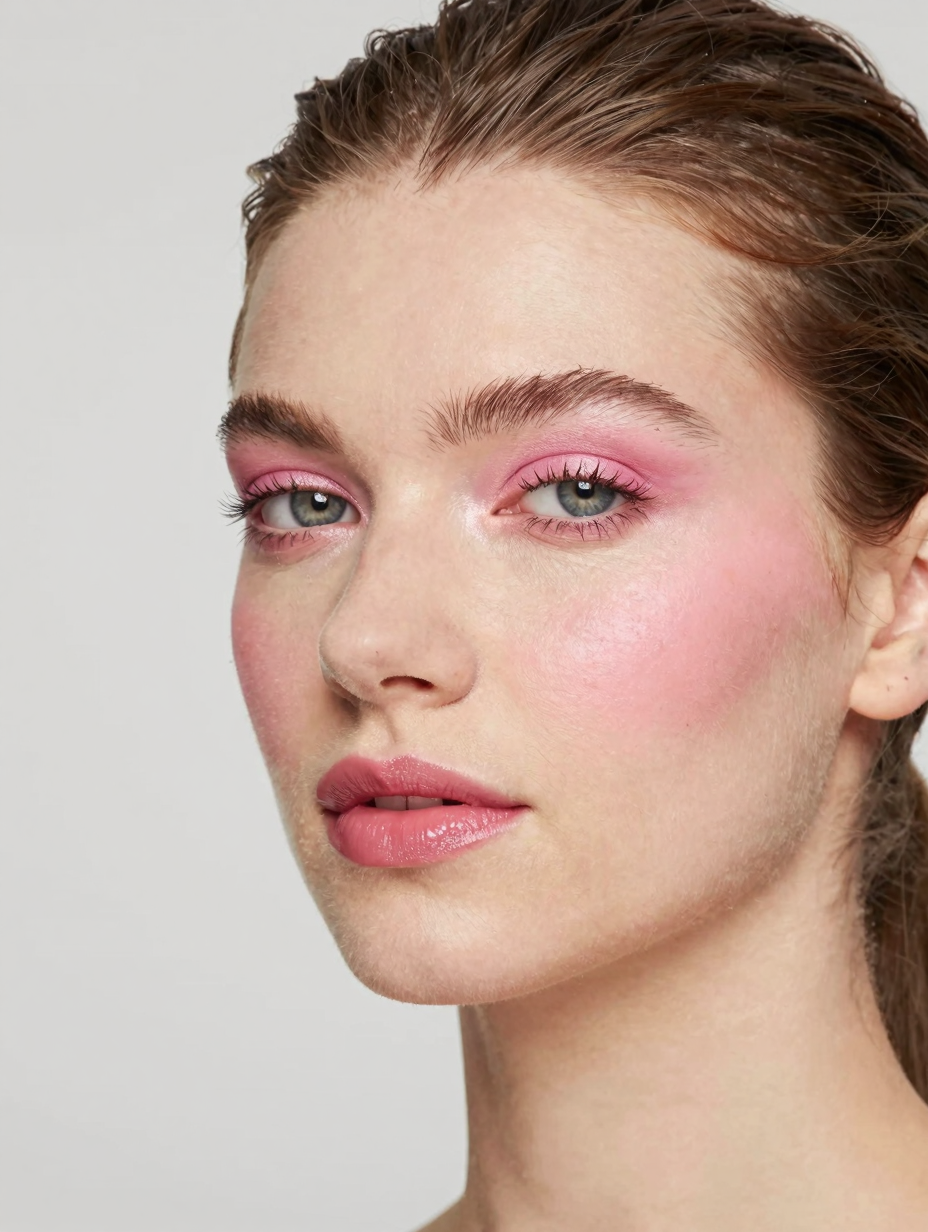
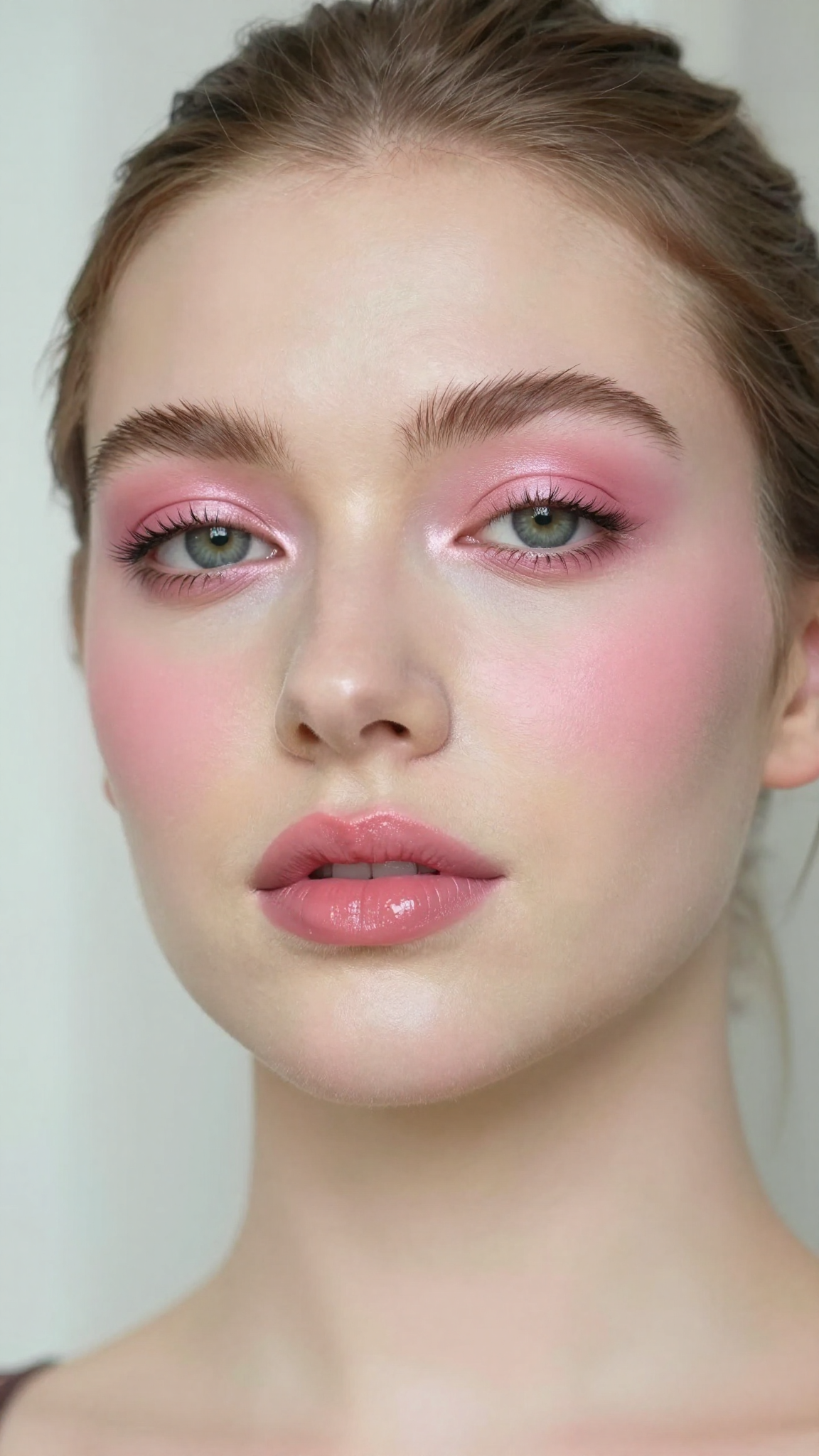
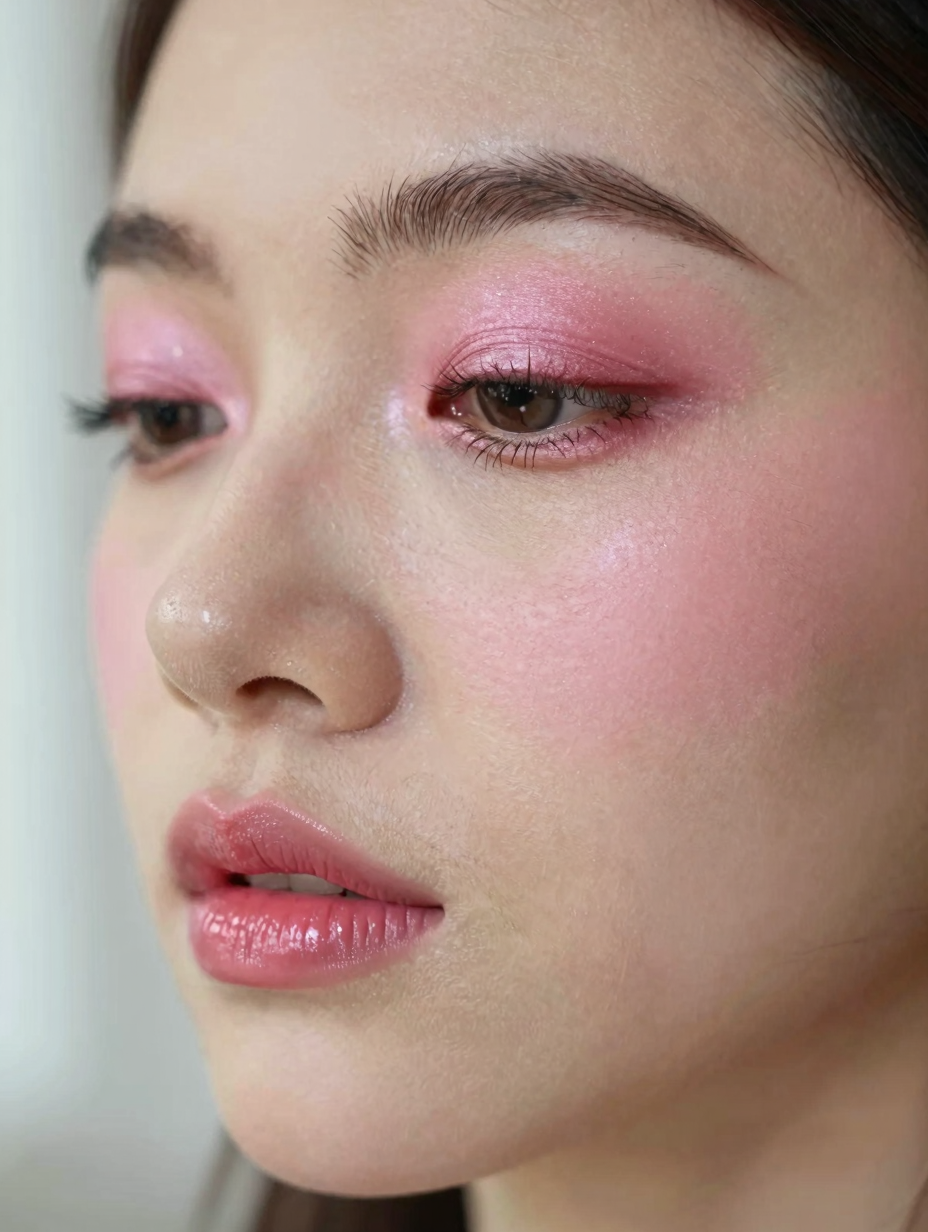
A full pink makeup look — eyes, cheeks and lips all in the same color family — can look either intentional and cohesive or mismatched and costume-like, and the difference almost entirely comes down to undertone consistency, not how much pink is used.
This version treats pink the way a neutral smokey eye treats brown: matte transition shade, shimmer lid, soft liner, and the same tone repeated in blush and lip to unify the whole face.
If unsure which pink undertone suits you, coral/peach (warm) is generally more universally flattering across skin tones than a very cool-toned berry pink, which can wash out some complexions if not balanced with warmer blush or bronzer.
Tips & Common Questions
How do I know if I look better in warm or cool pink?
Check the veins on your inner wrist in natural light — greenish veins usually indicate warmer undertones (coral/peach pinks suit better), while bluish veins usually indicate cooler undertones (berry/mauve pinks suit better).
Isn't an all-pink look too much for daytime?
Not if the intensity is dialed down — lighter, more sheer pink tones across eyes, cheeks and lips work fine for daytime, while more saturated, shimmery pink is better suited to evening.
Why does my pink eyeshadow look washed out?
Usually skipped primer or too sheer a shade for the pigment to show — apply eyeshadow primer first, and don't be afraid to build pink shadow in layers to get real pigment payoff rather than a faint wash of color.
Can pink eyeshadow work with a bold pink lip at the same time?
Yes, as long as both are in the same undertone family — the coordinated-undertone approach is specifically what allows multiple pink elements to work together instead of clashing.