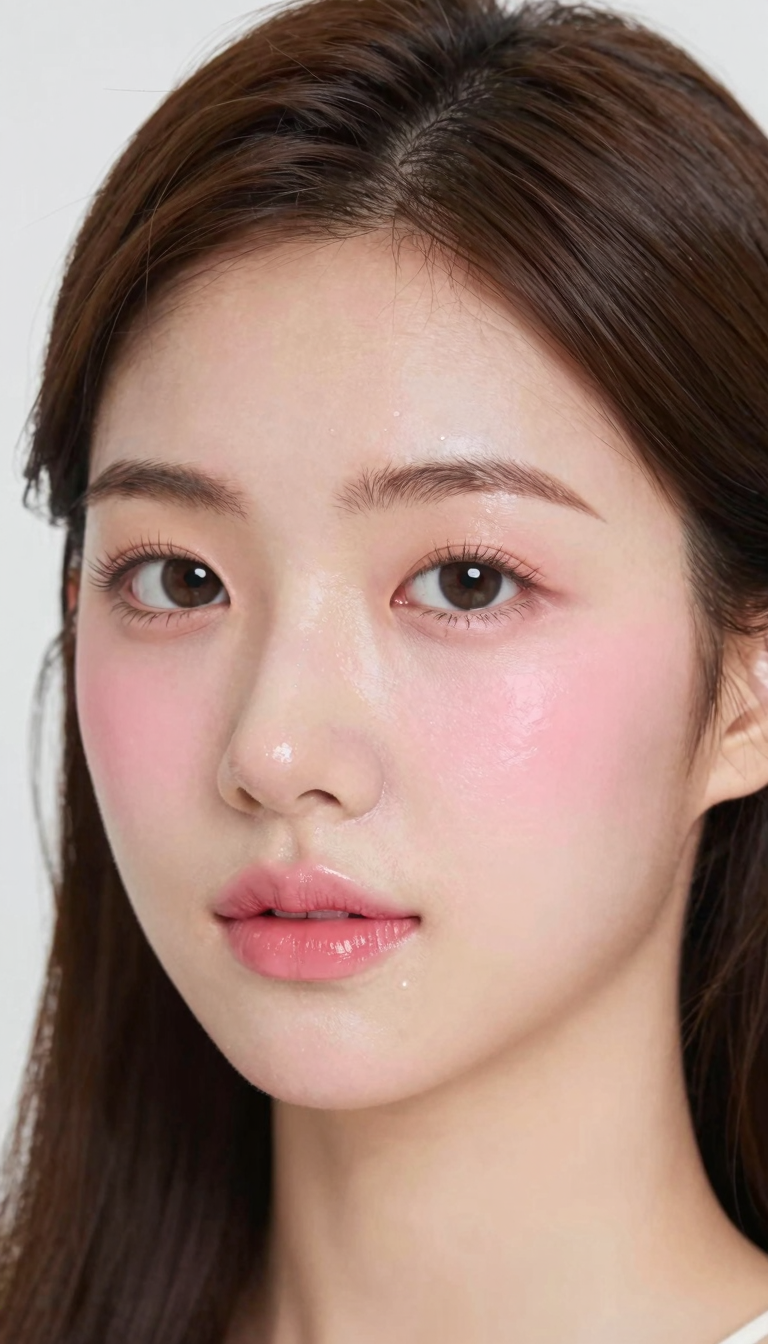
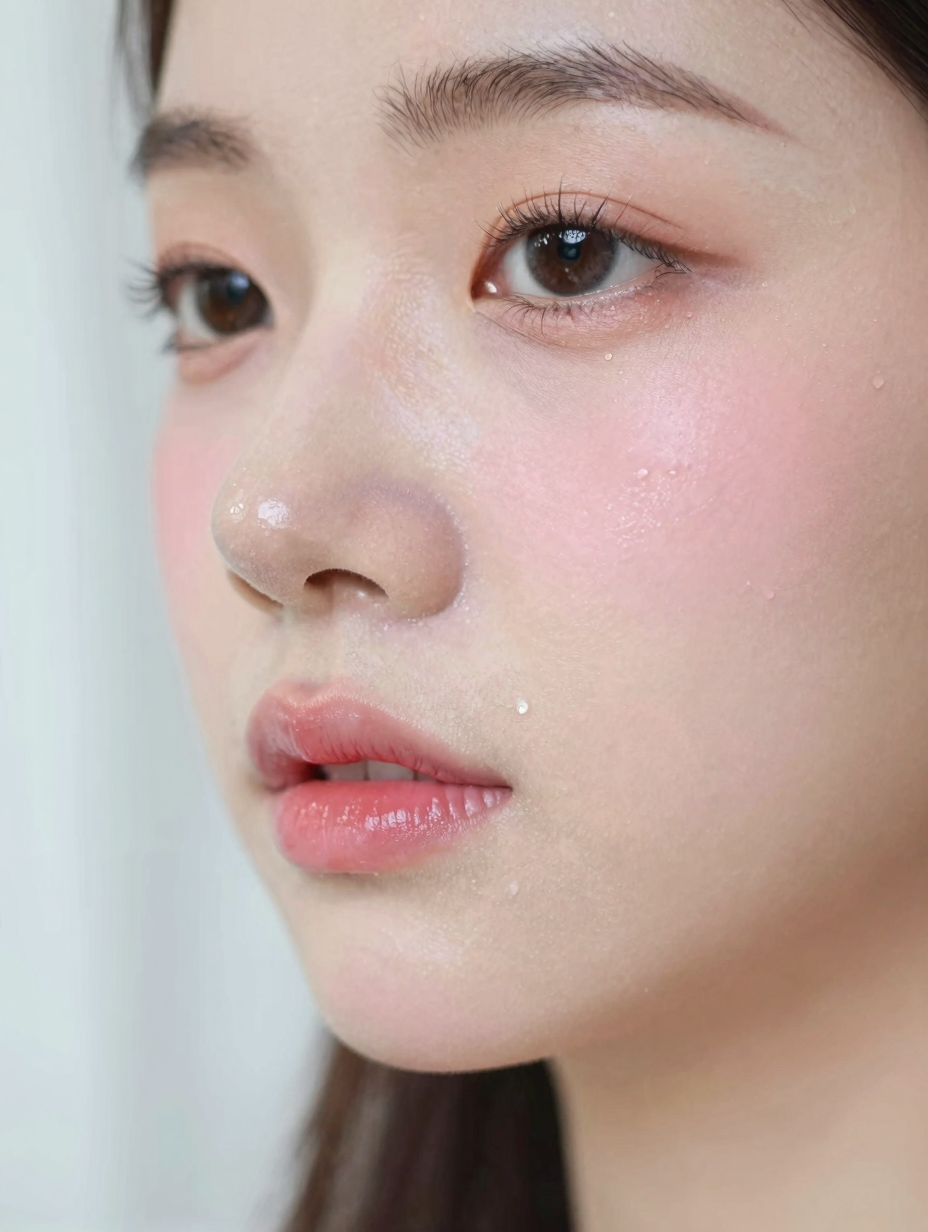
This look is built around two specific techniques — a glass-skin base achieved mostly through skin prep, and a gradient lip that fades from color at the center to bare at the edges — rather than a specific product list.
Both techniques rely more on layering and blending method than on any single 'magic product,' which is why they're reproducible with a wide range of skincare and makeup brands, not just Korean-market products specifically.
The gradient lip technique works better with your fingertip than a brush — a brush tends to create too clean and deliberate an edge, where fingertip patting leaves the slightly irregular fade the technique is going for.
Tips & Common Questions
What actually creates 'glass skin'?
Skin prep more than any single makeup product — layered hydration (essence, serum, moisturizer) fully absorbed before a thin, dewy-finish base goes on top. Heavy, full-coverage matte foundation works against the effect regardless of how it's applied.
How do I get a gradient lip without a hard line in the middle?
Apply color to the center of the lips only, then pat outward with a clean fingertip while the product is still soft — waiting too long to blend, or applying color too close to the outer lip edge from the start, both create a harder line than intended.
Does this work on oily skin?
Yes, but blot the T-zone with blotting paper rather than powder throughout the day — powder cuts directly against the dewy finish this look depends on, so oil control needs to come from blotting, not mattifying products.
Why keep the eye makeup so minimal?
The look is built to draw attention to skin and lip, both of which use techniques (glass skin, gradient) that take visual focus — a heavier eye competes with those rather than complementing them.