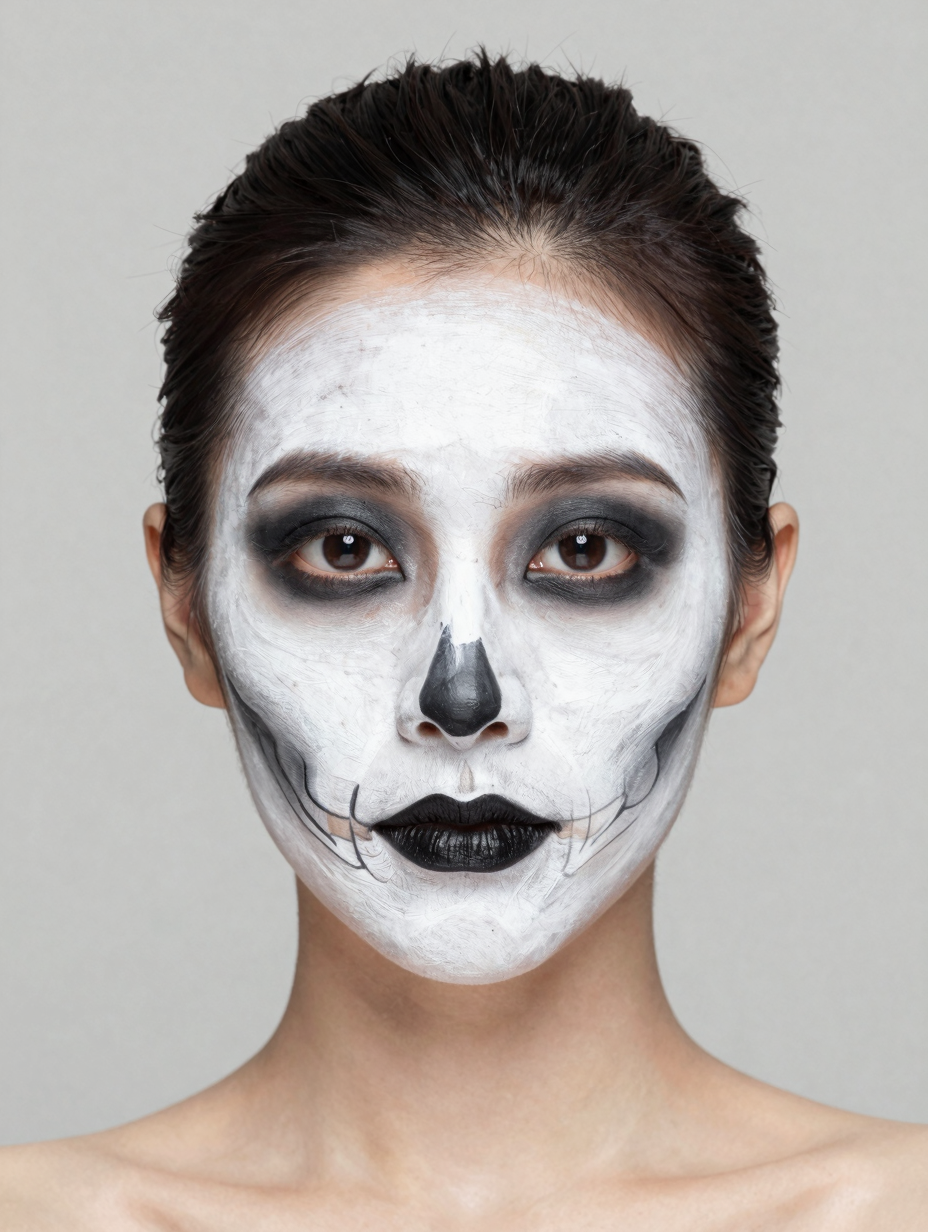
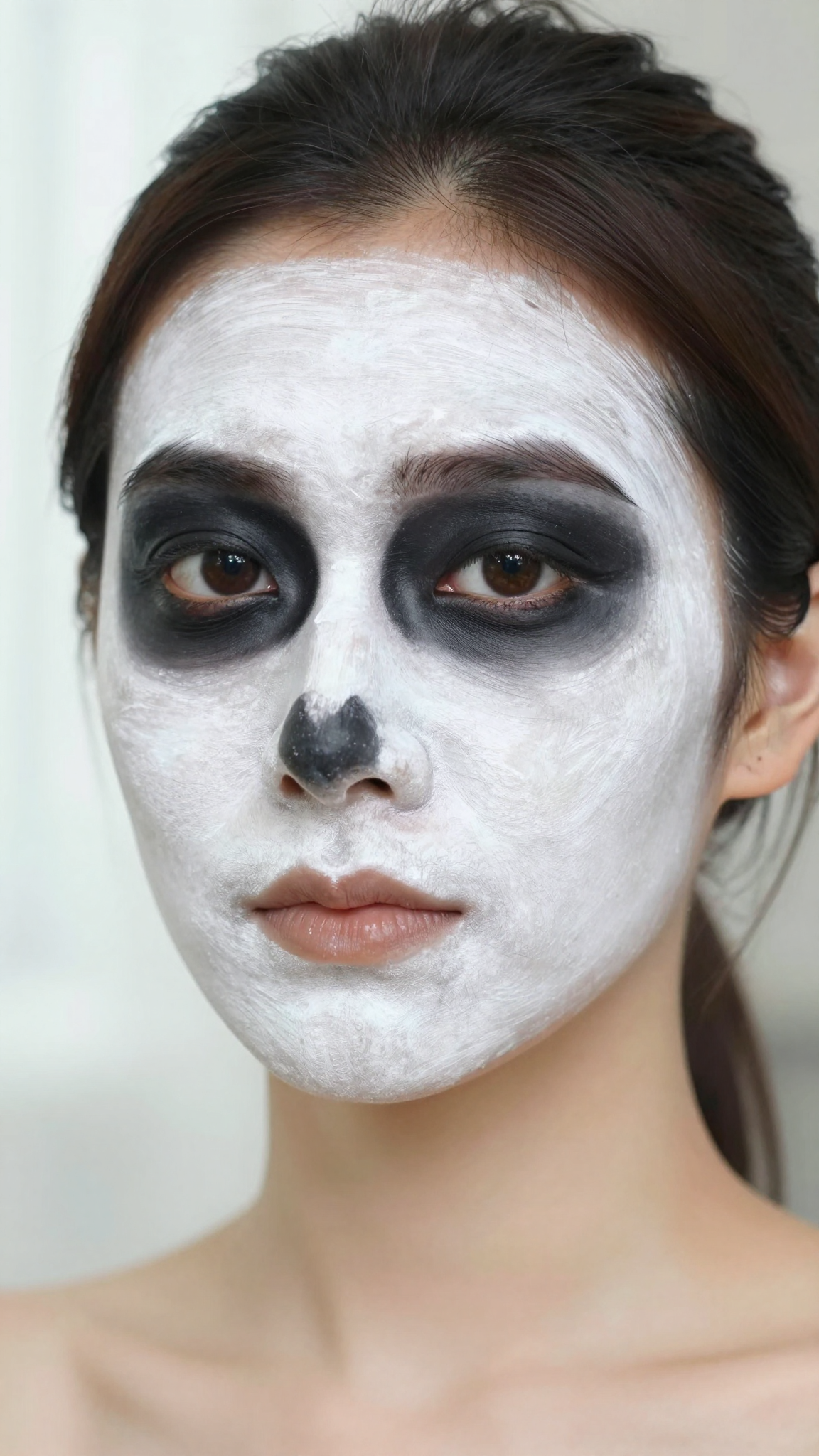
A convincing skeleton makeup look is a shading exercise, not a template — the difference between a flat, cartoonish result and a three-dimensional one comes down to shading your own actual bone structure rather than copying a generic reference photo's proportions.
This tutorial includes a specific mapping step before any black product goes on, which is the part most tutorials skip entirely.
Photograph your face in black-and-white partway through, after the white base and initial socket shading — it's often easier to spot where shading looks flat or uneven in a photo than in a mirror.
Tips & Common Questions
Why do generic skeleton makeup tutorials not look right on my face?
Most tutorials use a fixed shading template that doesn't account for individual bone structure — mapping your own cheekbones, temples and jaw by feel before shading gives a far more convincing, three-dimensional result.
How do I prevent white face paint from cracking or looking patchy?
Apply in thin layers rather than one thick coat, and moisturize well beforehand — thick, single-layer white face paint is the most common cause of visible cracking, especially around the mouth and eyes where the face moves most.
Does this need special face paint or can regular makeup work?
White cream eyeshadow and black eyeshadow can substitute for dedicated face paint in a pinch, though actual face paint gives more opaque, long-lasting coverage for a full-face look like this one.
How long does the white base take to fully dry/set?
A few minutes per layer if applying thin coats — rushing a thick single layer is what leads to cracking and uneven texture once it sets.